Smokeless Tobacco in India: A Call for Decisive Policy Action
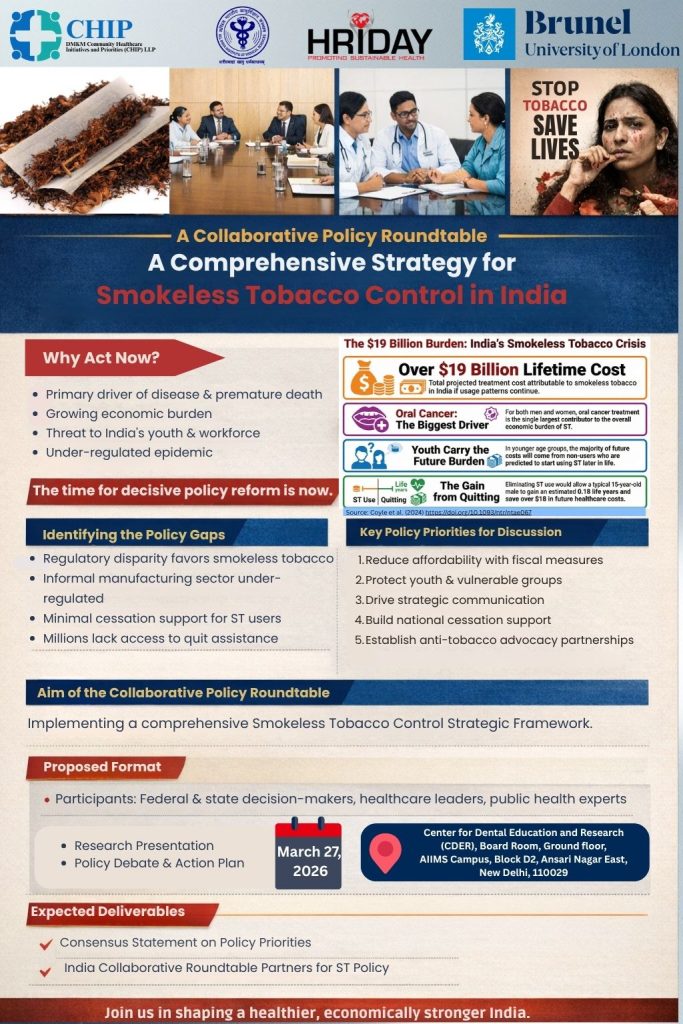
The March 2026 National Roundtable on Smokeless Tobacco (ST) Control, held in New Delhi, identified ST as a critical driver of disease, death, and economic loss in India. With over 200 million users, ST-related illnesses are projected to cost India more than US$19 billion in lifetime healthcare spending under current policies.
To address this, experts agreed on eight evidence-based priorities:
Taxation and Regulation: Implement uniform specific excise duties based on quantity and strengthen regulatory enforcement to close loopholes regarding packaging, surrogate advertising, and illicit manufacturing.
Youth Protection: Prioritize early prevention through Tobacco-Free Educational Institutions (TOFEI) guidelines, community-based awareness, and stricter penalties for sales to minors.
Cessation Infrastructure: Integrate ST cessation into primary healthcare via existing centers and expand national quitline services to include mobile and regional-language support.
Registration and Coordination: Develop a phased registration roadmap for small-scale manufacturers to formalize the sector. Ensure inter-sectoral coordination by creating viable alternative livelihoods for tobacco farmers and small-scale rollers.
Workforce Training: Integrate structured cessation modules into medical, dental, and nursing curricula and provide digital training for in-service health workers.
Decentralised Strategies: Adapt national strategies to account for India’s regional, cultural, and socio-economic diversity, leveraging successful state-level community models.
The current burden of ST is immense, with India accounting for approximately 70% of the 350,000 global deaths attributed annually to ST use. Effectively addressing this crisis requires shifting the focus of tobacco control policies—which have historically prioritized smoking—to treat ST with equal urgency.
Policy Brief 2026 / Consensus statement: Smokeless Tobacco in India: A Call for Decisive Policy Action